

Vivaldi at the club? Orchestra Q says ‘Yes, Queens’
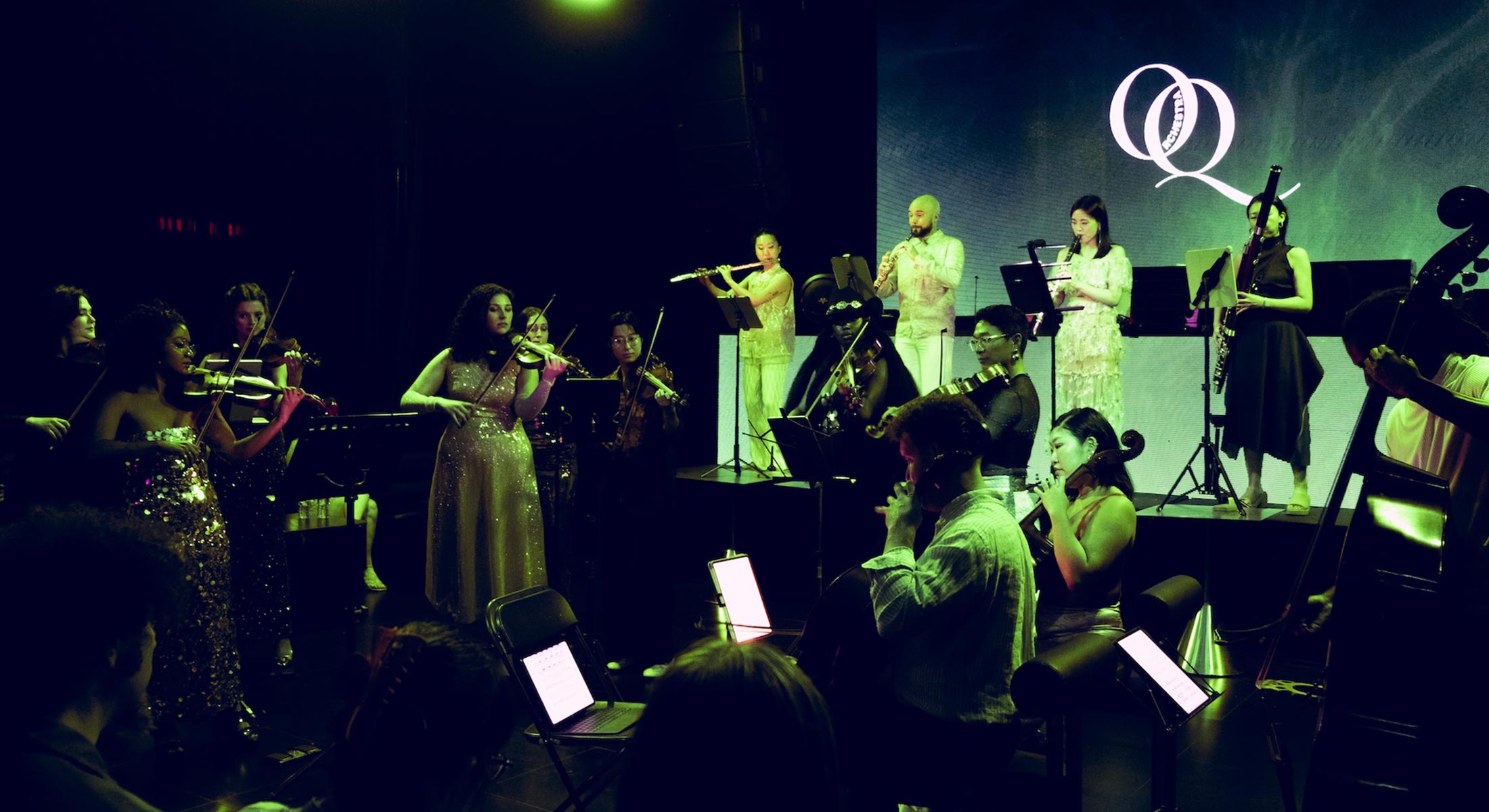
Photo: Ayaka Kato
Loading the Elevenlabs Text to Speech AudioNative Player...
Inside a packed New York City nightclub, a glitter-clad ensemble takes the stage. People cheer, take photos, drink and dance under disco lights.
It’s not the usual scene for classical musicians playing Vivaldi’s “The Four Seasons,” but when mixed with a DJ set, it just might be. The act is Orchestra Q, a Queens-based collective reimagining the genre.
“Back in the day, quartets were written for house parties where people would drink and listen to music in their living rooms,” said flutist and orchestra founder Eva Ding. “That's the culture.”
Orchestra Q is conductorless. It’s democratic. It’s genre-bending and interdisciplinary with dancers, actors and visual artists. It’s not afraid to break the rules.
“It’s a way to breathe new life into classical music, which is something I’ve been looking for for a very long time,” said violinist Shaleah Feinstein.
Feinstein said Orchestra Q represents classical’s new wave: making it fun.
About a year ago, Ding, an orchestra manager in Brooklyn at the time, pitched the idea for Orchestra Q over drinks with peers. She now has 20 musicians on board.
Ding’s vision is that each musician can have a chance to shine. Concerts start small with a chamber piece, then musicians join into an overture, followed by a big symphonic closer.
“We're not set on just playing the classical cannon,” Ding said. “But some of it that I do know and love, I want to share with more people.”
Start-ups like Orchestra Q are needed to reach the younger generation, oboist Zachary Pulse said, especially as the Trump administration slashes arts education funding. It’s personal for Pulse, who said classical music helped him blossom as a “shy, queer kid” in a small Midwestern town.
“It gave me something to live for,” he said.
Orchestra Q can attract people who lack exposure to the classical arts, Ding said, or who find a sit-down concert at a prestigious venue too costly or intimidating.
“It has to come from the ground up,” she said. “Without education, there's no appreciation.”
Ding, who moved to New York City in 2017 and earned her Master of Music degree two years later, met most of her Orchestra Q peers through freelance gigs. Winning full-time orchestra jobs is tough – each chair sees hundreds of applicants – but many musicians are taking another route by choice.
“Even if you win a job, you're not guaranteed a life of being able to pay your rent anymore,” Feinstein said.
Pulse, who’s played the oboe for 25 years, said he’d seen “incredibly low job satisfaction” at American orchestras. Aside from pay, he said, many find it exhausting and creatively stifling.
Feinstein won two orchestra jobs after attending the Cleveland Institute of Music, but instead continued her studies at The Juilliard School. She now plays regularly at the Metropolitan Opera and subs for the New York Philharmonic, and loves it. She also makes half her income recording for jazz, pop and rap artists, or live gigs including a stint on Broadway.
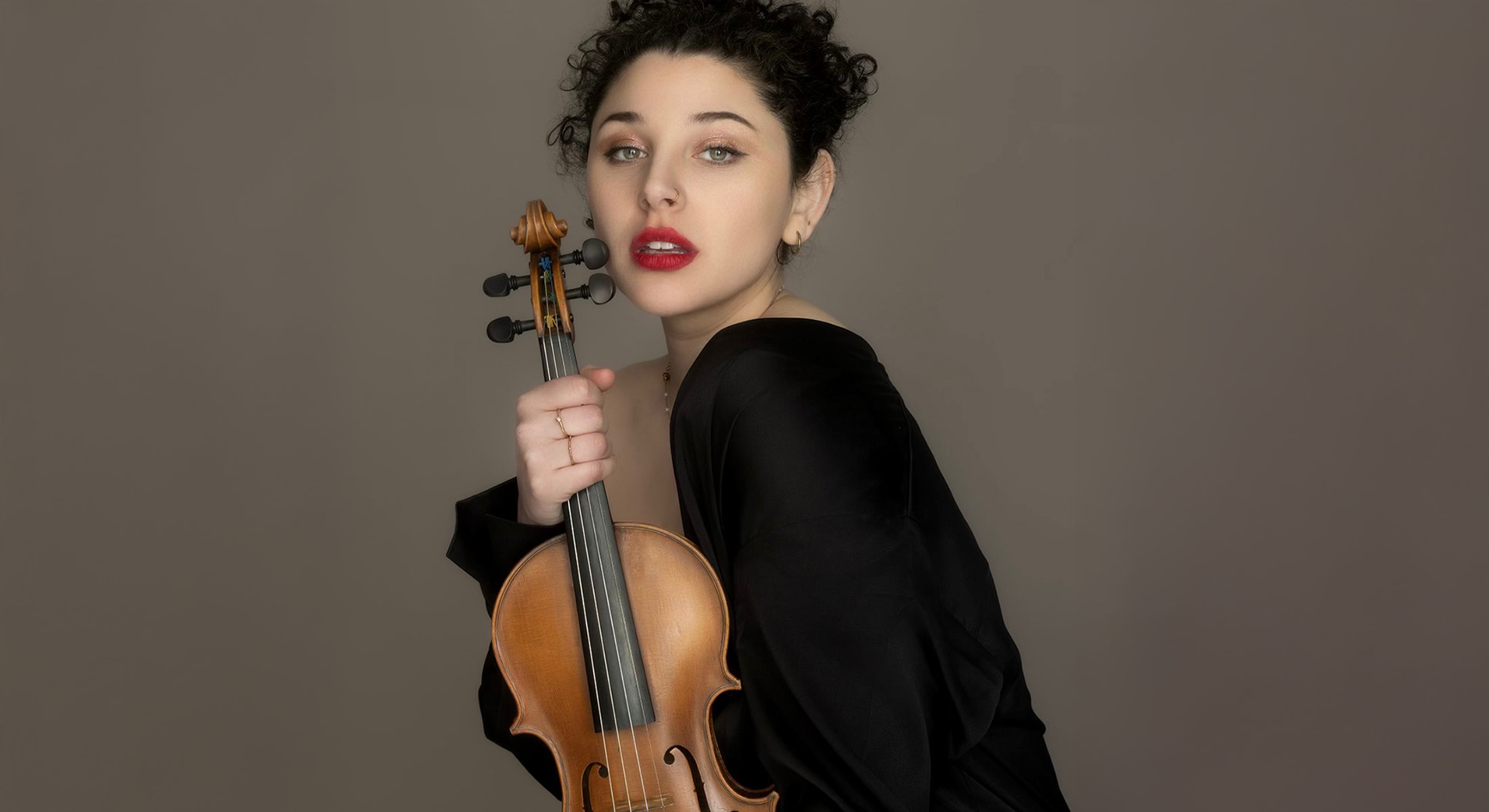
Feinstein and Ding met as performers in Jon Batiste’s “American Symphony” at Carnegie Hall, which Netflix made into a Grammy award-winning documentary. But when Feinstein first began playing for Batiste, her music teachers warned against it.
Interdisciplinary musicians aren’t celebrated in most music programs, Feinstein said. They’re seen as at risk of losing their chops, or reputation as serious classical musicians.
“People are so scared that if we let go a little bit, it will be lost,” Feinstein said. “But the way things are going is just not sustainable anymore.”
Ding contends that 21st century classical musicians need more than technical skills – not just to succeed commercially, but “emotionally and mentally”.
Over the past five years, American orchestras have reported newer, younger audiences. But many in the industry say it’s not enough, and have called for big changes amid a crescendo of financial woes, labor strikes and sexual scandals.
Since the pandemic, the NY Phil has faced troubles including a cash deficit of about $8 million, and musicians spoke out that they’d gone five years without raises. Meanwhile, the Met has withdrawn nearly one third of its endowment ($120 million), and turned to Saudi Arabia in a controversial move to get its finances back on track.
With institutions that large, ticket sales only cover a portion of the budget. Survival requires hundreds of millions each year from philanthropy.
“They rely so heavily on these small pools of donors,” Ding said.
When it comes to making orchestras or any performing arts group sustainable, there’s no magic bullet. Ding hopes by going hyperlocal with a focus in Queens, she can tap into a niche market.
“It's up-and-coming,” Ding said. “It’s really ripe for growth.”
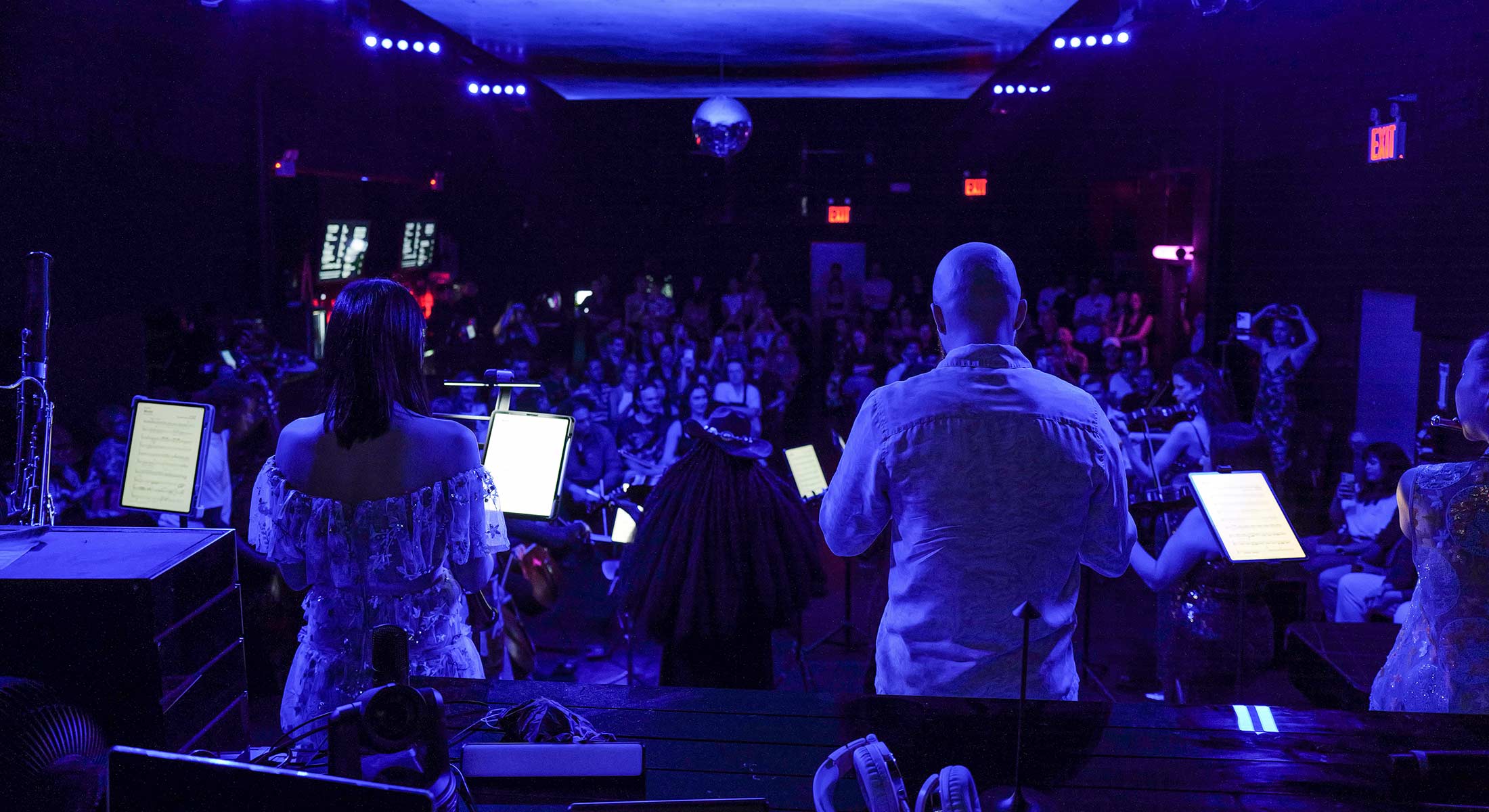
The Queens Symphony Orchestra has hosted free concerts and youth programs since the 1970s, but its activity has dwindled over the past decade. And since Orchestra Q is larger than a typical chamber ensemble but smaller than a standard orchestra, there’s more flexibility in performances and venues. Ding’s goal is for Orchestra Q, now the borough’s most active orchestra, to become a cultural pillar in the New York arts scene.
She saw the potential when she founded KOE, a flute-cello duo that put on multimedia shows with Asian American and other diverse artists. Ding, who was born in Shanghai and raised in Auckland, won more than $15,000 from Chamber Music America for the project.
“There are grants for fresh and new ideas,” she said, “to make classical music that’s interactive, exciting, touching and narrative-based.”
The orchestra put on their first concert in June at 00:00 nightclub in Long Island City, one of the more artsy neighborhoods in Queens. It was a packed house.
Orchestra Q isn’t the only group riding this new wave, from string collectives with viral pop and R&B covers to Babatunde Akinboboye’s “hip hopera” to Candlelight Concerts, which has sold millions of tickets thanks to aggressive social media marketing from its parent company Fever.
Some chamber orchestras play without conductors, like the Orpheus Chamber Orchestra and Chamber Orchestra of Europe. Larger orchestras have worked to diversify their programming, up their social media game and add elements like live streaming. But sweeping changes at large institutions are unlikely due to “gatekeepers” on multiple levels, Pulse said.
“It's a difficult balance to try new things,” Pulse said, when some people “want things to be done the way they always have been done.”
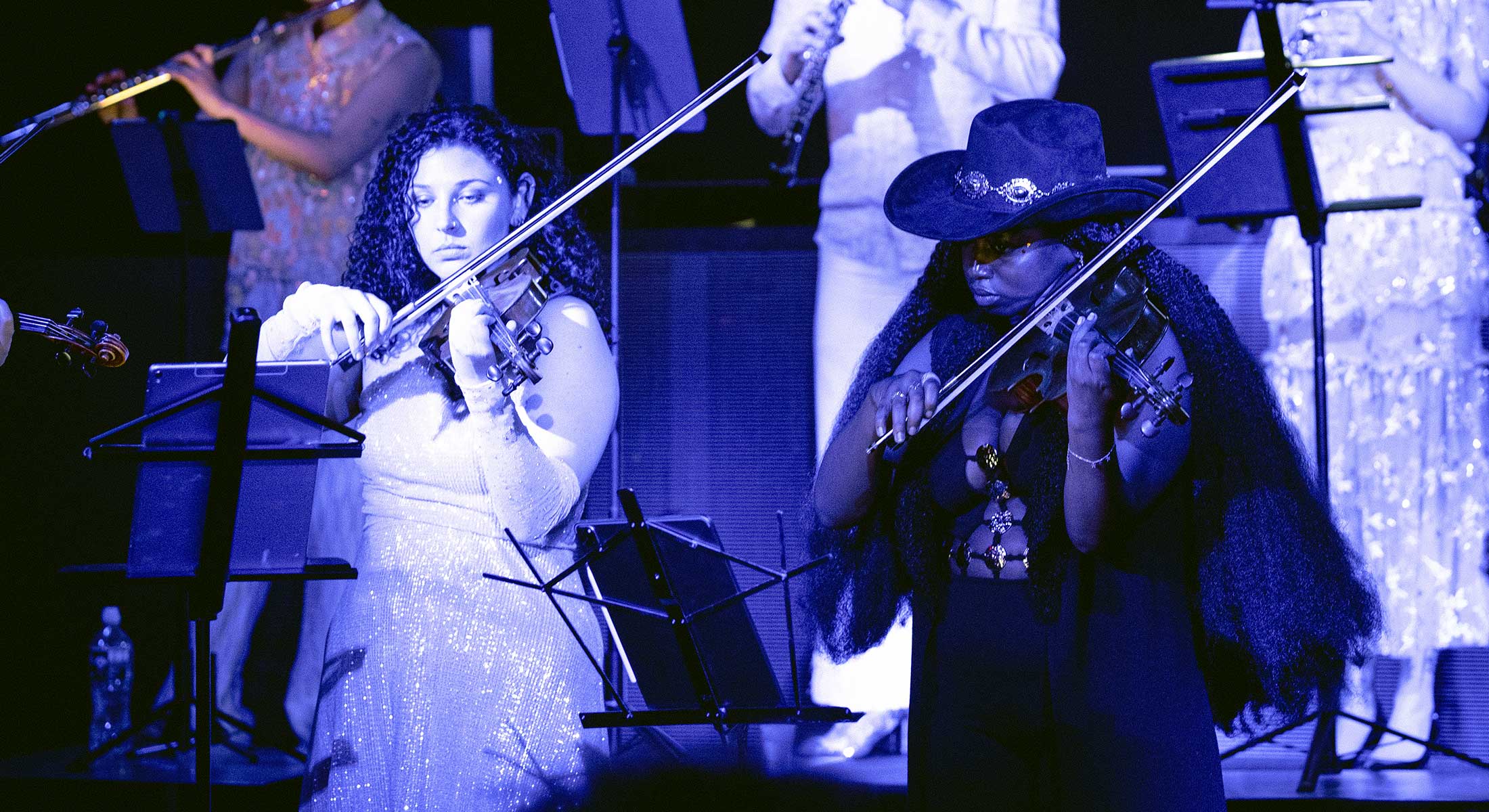
Meanwhile, many young, talented musicians who could revamp the industry are exploring their passion outside traditional orchestra chairs. Groups like Orchestra Q give them the chance to create their own rules, and make a living by their own terms.
“My mom always told me, ‘You have to think outside the box,’” Feinstein said. ”You have to create opportunities.”
Orchestra Q’s next concert, “Sleigh the Night,” is set for Dec. 9 at The Roof at 74Wythe in Brooklyn. Performers include Eddie Barbash, a jazz saxophonist and founding member of the house band for the Late Show with Stephen Colbert.
It’s not the usual scene for classical musicians playing Vivaldi’s “The Four Seasons,” but when mixed with a DJ set, it just might be. The act is Orchestra Q, a Queens-based collective reimagining the genre.
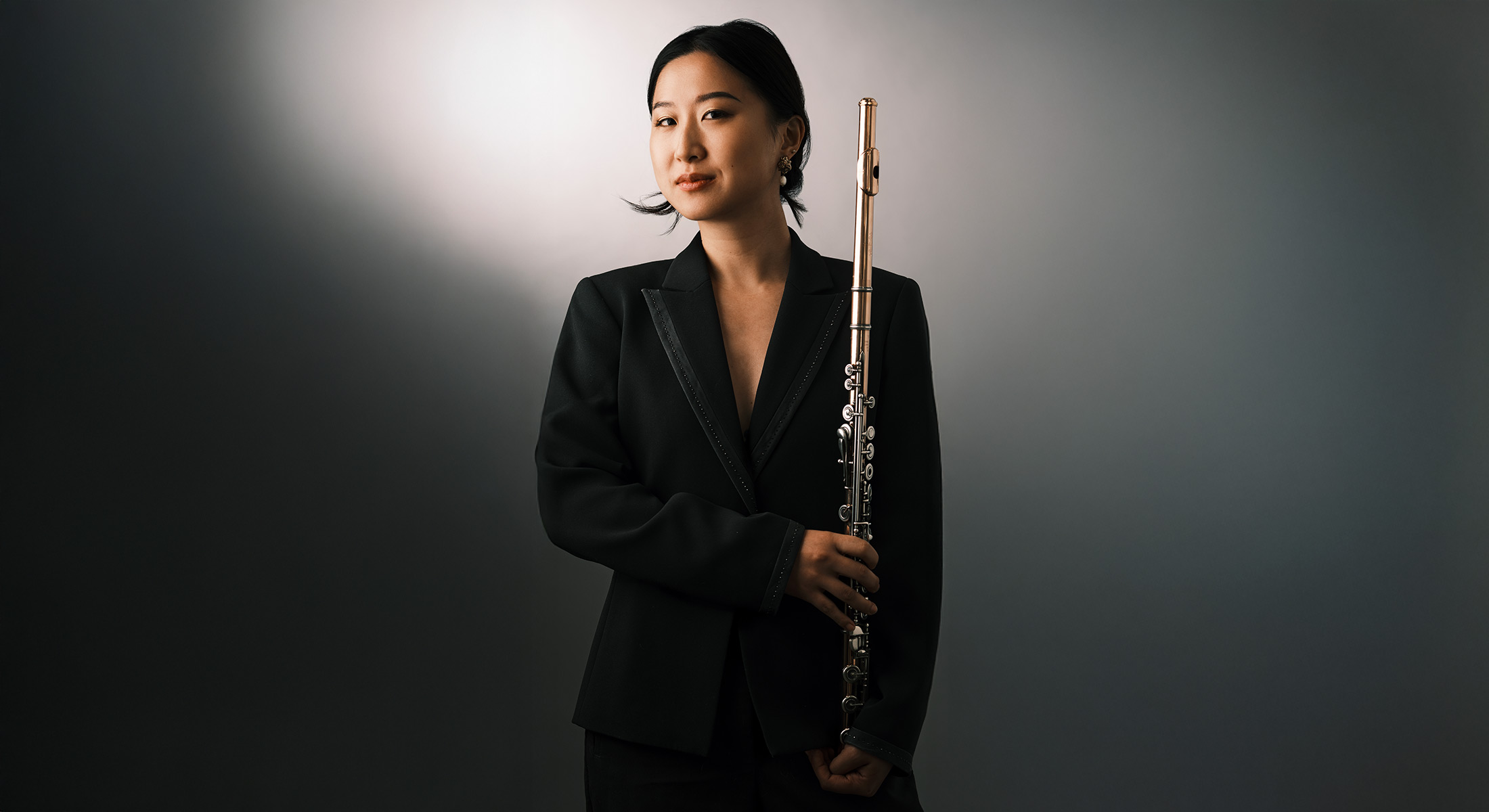
“Back in the day, quartets were written for house parties where people would drink and listen to music in their living rooms,” said flutist and orchestra founder Eva Ding. “That's the culture.”
Orchestra Q founder Eva Ding
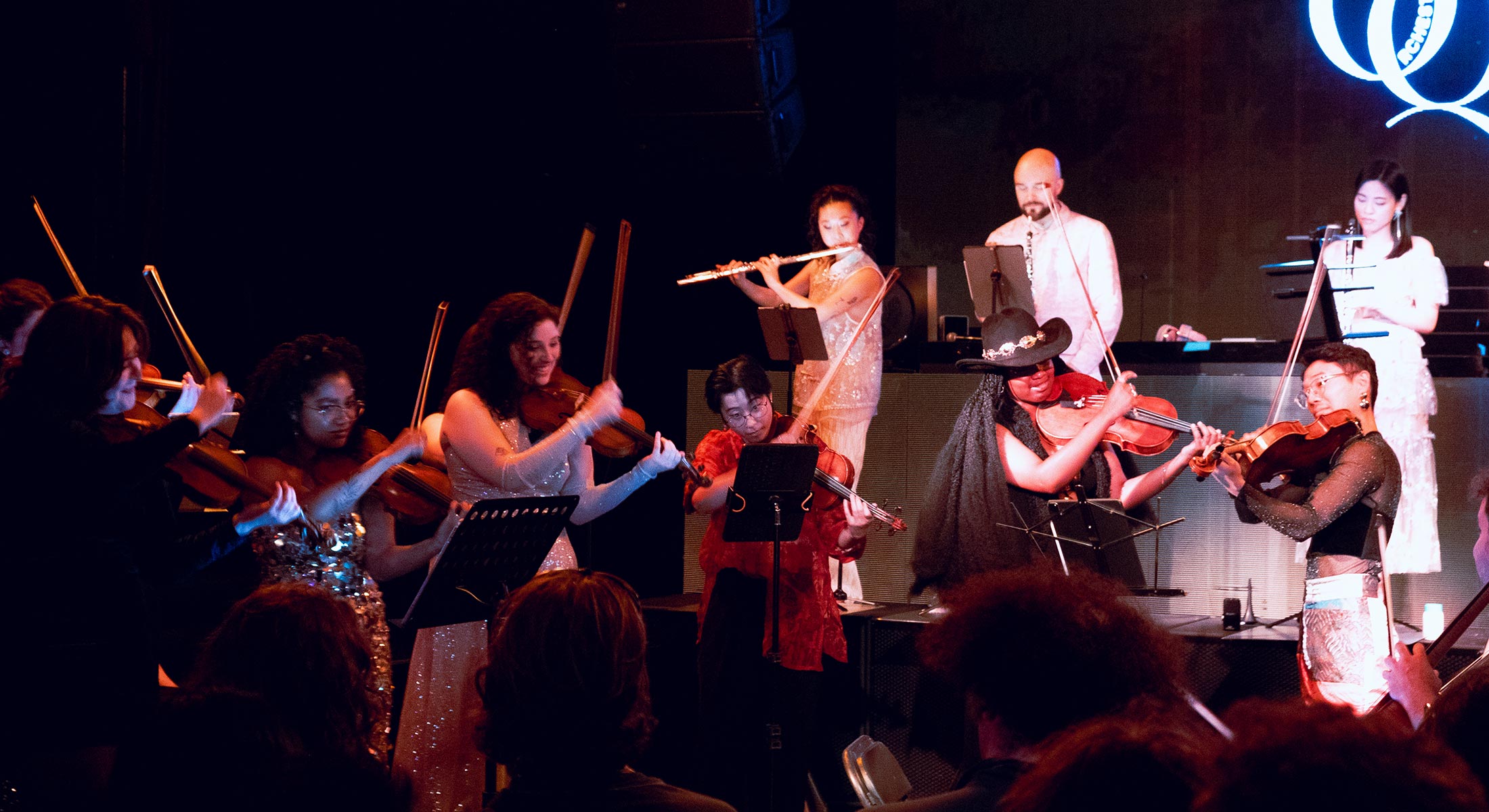
Orchestra Q is conductorless. It’s democratic. It’s genre-bending and interdisciplinary with dancers, actors and visual artists. It’s not afraid to break the rules.
“It’s a way to breathe new life into classical music, which is something I’ve been looking for for a very long time,” said violinist Shaleah Feinstein.
Feinstein said Orchestra Q represents classical’s new wave: making it fun.
Photo: Chia-Ta Tsai
‘From the ground up’
About a year ago, Ding, an orchestra manager in Brooklyn at the time, pitched the idea for Orchestra Q over drinks with peers. She now has 20 musicians on board.
Ding’s vision is that each musician can have a chance to shine. Concerts start small with a chamber piece, then musicians join into an overture, followed by a big symphonic closer.
“We're not set on just playing the classical cannon,” Ding said. “But some of it that I do know and love, I want to share with more people.”
Start-ups like Orchestra Q are needed to reach the younger generation, oboist Zachary Pulse said, especially as the Trump administration slashes arts education funding. It’s personal for Pulse, who said classical music helped him blossom as a “shy, queer kid” in a small Midwestern town.
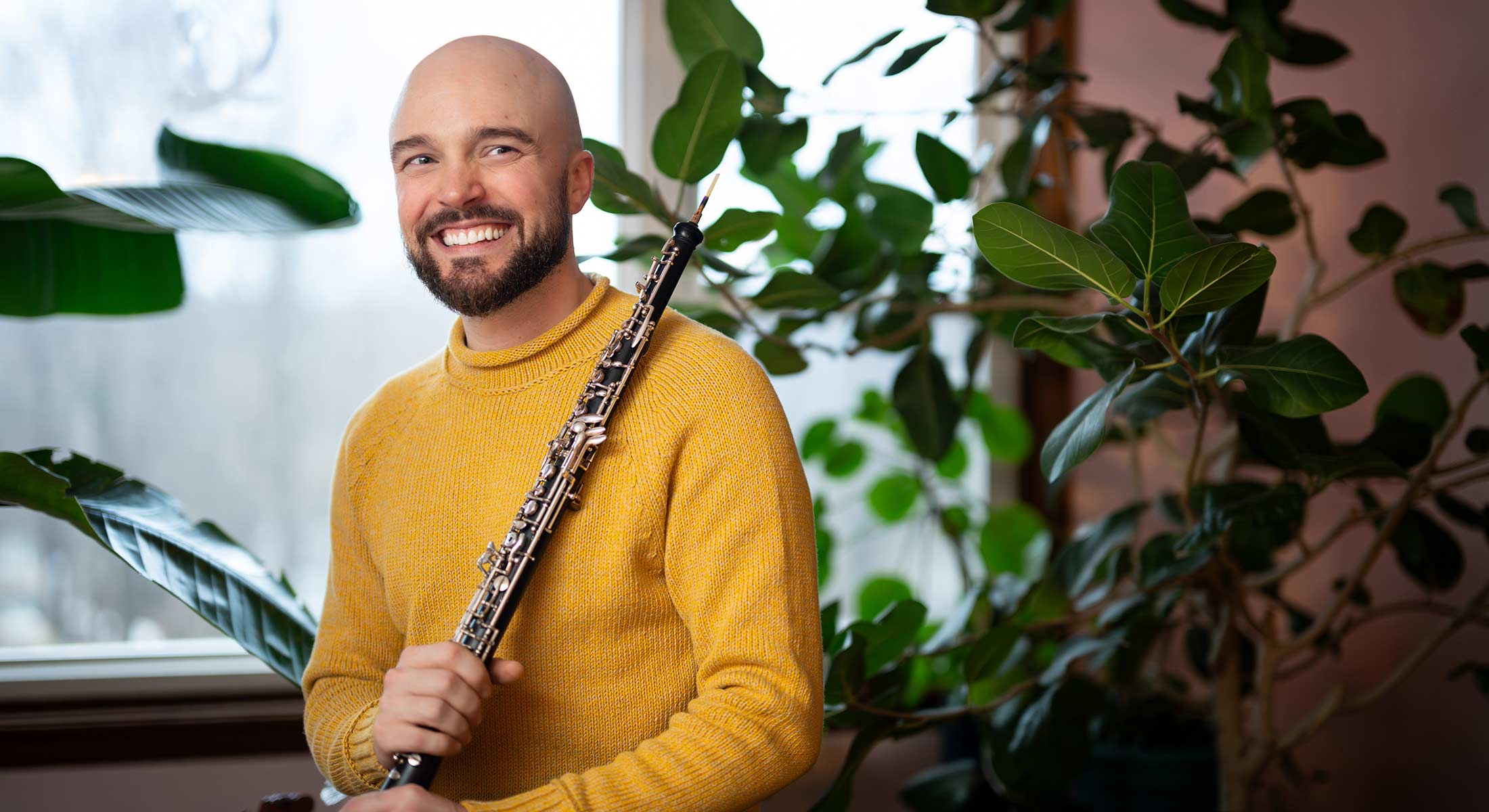
Zachary Pulse
“It gave me something to live for,” he said.
Orchestra Q can attract people who lack exposure to the classical arts, Ding said, or who find a sit-down concert at a prestigious venue too costly or intimidating.
“It has to come from the ground up,” she said. “Without education, there's no appreciation.”
‘Not sustainable anymore’
Ding, who moved to New York City in 2017 and earned her Master of Music degree two years later, met most of her Orchestra Q peers through freelance gigs. Winning full-time orchestra jobs is tough – each chair sees hundreds of applicants – but many musicians are taking another route by choice.
“Even if you win a job, you're not guaranteed a life of being able to pay your rent anymore,” Feinstein said.
Pulse, who’s played the oboe for 25 years, said he’d seen “incredibly low job satisfaction” at American orchestras. Aside from pay, he said, many find it exhausting and creatively stifling.
Feinstein won two orchestra jobs after attending the Cleveland Institute of Music, but instead continued her studies at The Juilliard School. She now plays regularly at the Metropolitan Opera and subs for the New York Philharmonic, and loves it. She also makes half her income recording for jazz, pop and rap artists, or live gigs including a stint on Broadway.
Shaleah Feinsteine
Feinstein and Ding met as performers in Jon Batiste’s “American Symphony” at Carnegie Hall, which Netflix made into a Grammy award-winning documentary. But when Feinstein first began playing for Batiste, her music teachers warned against it.
Interdisciplinary musicians aren’t celebrated in most music programs, Feinstein said. They’re seen as at risk of losing their chops, or reputation as serious classical musicians.
“People are so scared that if we let go a little bit, it will be lost,” Feinstein said. “But the way things are going is just not sustainable anymore.”
Ding contends that 21st century classical musicians need more than technical skills – not just to succeed commercially, but “emotionally and mentally”.
An ‘up-and-coming’ market
Over the past five years, American orchestras have reported newer, younger audiences. But many in the industry say it’s not enough, and have called for big changes amid a crescendo of financial woes, labor strikes and sexual scandals.
Since the pandemic, the NY Phil has faced troubles including a cash deficit of about $8 million, and musicians spoke out that they’d gone five years without raises. Meanwhile, the Met has withdrawn nearly one third of its endowment ($120 million), and turned to Saudi Arabia in a controversial move to get its finances back on track.
With institutions that large, ticket sales only cover a portion of the budget. Survival requires hundreds of millions each year from philanthropy.
“They rely so heavily on these small pools of donors,” Ding said.
When it comes to making orchestras or any performing arts group sustainable, there’s no magic bullet. Ding hopes by going hyperlocal with a focus in Queens, she can tap into a niche market.
“It's up-and-coming,” Ding said. “It’s really ripe for growth.”
Photo: Chia-Ta Tsai
The Queens Symphony Orchestra has hosted free concerts and youth programs since the 1970s, but its activity has dwindled over the past decade. And since Orchestra Q is larger than a typical chamber ensemble but smaller than a standard orchestra, there’s more flexibility in performances and venues. Ding’s goal is for Orchestra Q, now the borough’s most active orchestra, to become a cultural pillar in the New York arts scene.
She saw the potential when she founded KOE, a flute-cello duo that put on multimedia shows with Asian American and other diverse artists. Ding, who was born in Shanghai and raised in Auckland, won more than $15,000 from Chamber Music America for the project.
“There are grants for fresh and new ideas,” she said, “to make classical music that’s interactive, exciting, touching and narrative-based.”
The orchestra put on their first concert in June at 00:00 nightclub in Long Island City, one of the more artsy neighborhoods in Queens. It was a packed house.
‘Try new things’
Orchestra Q isn’t the only group riding this new wave, from string collectives with viral pop and R&B covers to Babatunde Akinboboye’s “hip hopera” to Candlelight Concerts, which has sold millions of tickets thanks to aggressive social media marketing from its parent company Fever.
Some chamber orchestras play without conductors, like the Orpheus Chamber Orchestra and Chamber Orchestra of Europe. Larger orchestras have worked to diversify their programming, up their social media game and add elements like live streaming. But sweeping changes at large institutions are unlikely due to “gatekeepers” on multiple levels, Pulse said.
“It's a difficult balance to try new things,” Pulse said, when some people “want things to be done the way they always have been done.”
Photo: Chia-Ta Tsai
Meanwhile, many young, talented musicians who could revamp the industry are exploring their passion outside traditional orchestra chairs. Groups like Orchestra Q give them the chance to create their own rules, and make a living by their own terms.
“My mom always told me, ‘You have to think outside the box,’” Feinstein said. ”You have to create opportunities.”
Orchestra Q’s next concert, “Sleigh the Night,” is set for Dec. 9 at The Roof at 74Wythe in Brooklyn. Performers include Eddie Barbash, a jazz saxophonist and founding member of the house band for the Late Show with Stephen Colbert.
***
Sydney Jackson is editor-in-chief of Ode and reports on culture, policy, and performance across the United States. She lives in Seattle.Join the Club
Follow the organizations you care about. Track and save events as they’re announced, and discover your next enriching experience on Ode.